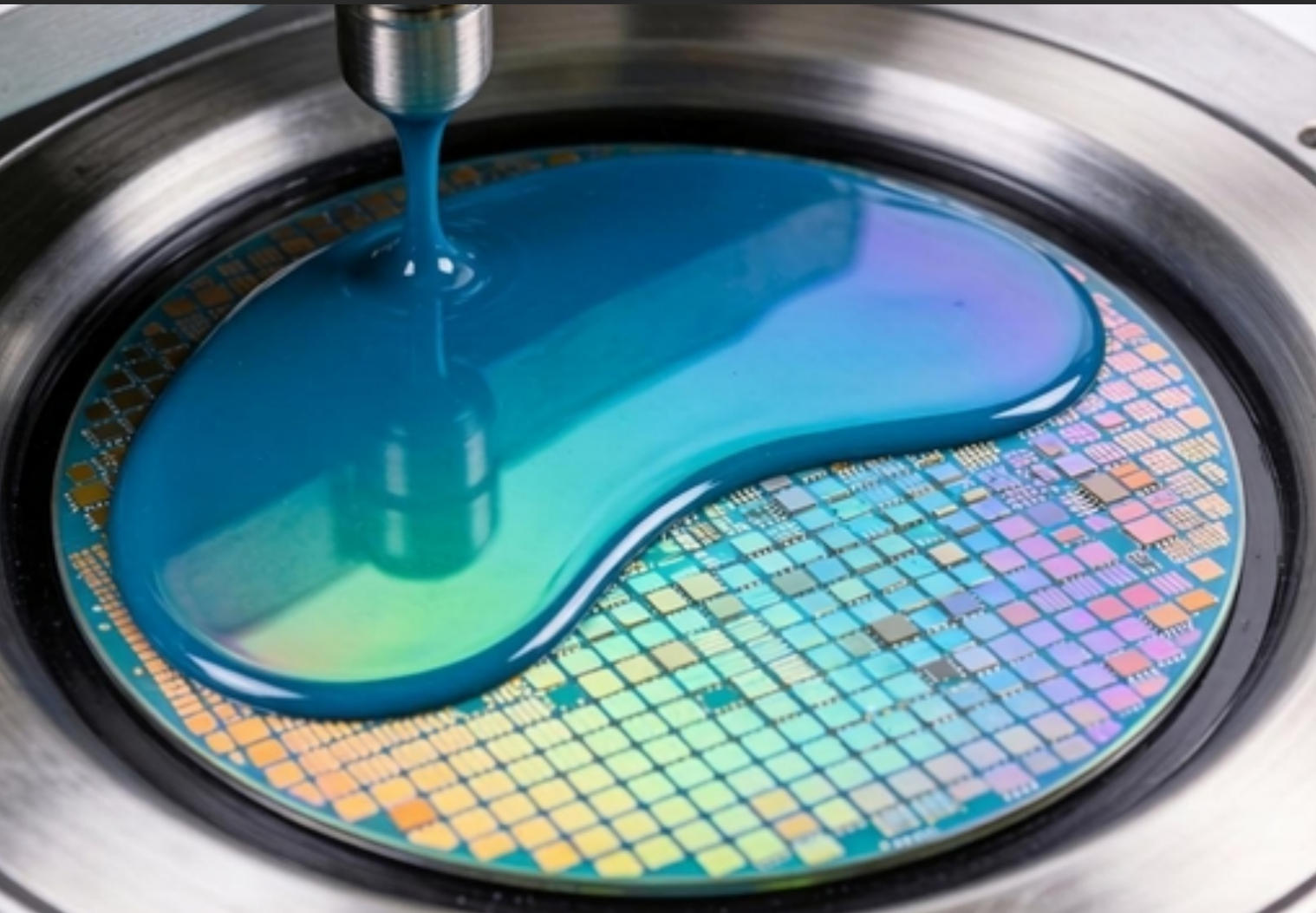
In semiconductor microfabrication, MEMS, microfluidics, advanced packaging and other fields, chemically amplified negative photoresists have long confronted several common challenges. Conventional glycoluril crosslinkers exhibit excessively high reactivity, which leads to obvious dark reaction, short pot life of photoresist stock solutions and poor batch-to-batch stability. Their compatibility with novolac resins and hydroxystyrene resins is limited, causing pinholes and haze in coated films. Besides, uncontrollable crosslink density after exposure results in rough pattern edges, large linewidth variation and insufficient dry etch resistance.
3a-methyl-6a-n-propyl-1,3,4,6-tetramethoxymethylglycoluril, abbreviated as PLPM, CAS: 220140-29-4, adopts a dual alkyl modification design (methyl + n-propyl) on the glycoluril core to precisely tune crosslinking reaction kinetics. It is a specialized crosslinking monomer with rising recognition in iterative formulation development of high-end domestic negative photoresists.
CAS No.: 220140-29-4
Standard Chemical Name: 1,3,4,6-tetrakis(methoxymethyl)-3a-methyl-6a-propyltetrahydroimidazo[4,5-d]imidazole-2,5(1H,3H)-dione
Abbreviation: PLPM
Molecular Formula: C₁₆H₃₀N₄O₆
Molecular Weight: 374.44
Molecular Category: Glycoluril-type nitrogen heterocyclic crosslinker with four reactive methoxymethyl sites and a di-alkyl substituted core structure
Typical Electronic-Grade Specifications:
PLPM is an acid-catalyzed crosslinker, forming a chemical amplification system when paired with photoacid generators (PAG). In exposed regions, the photoacid generator releases protic acid upon excitation by light source. During post-exposure bake (PEB), acid catalyzes demethanolation of methoxymethyl groups on PLPM to generate highly reactive iminium carbocations. These carbocations subsequently undergo electrophilic substitution with phenolic hydroxyl groups on resin backbones, forming stable covalent crosslinking networks between polymer chains.
Compared with unmodified TMMGU (17464-88-9, tetramethoxymethylglycoluril), the introduction of methyl and n-propyl hydrophobic alkyl side chains on the core brings three merits:
1. Increased steric hindrance reduces intrinsic crosslinking reactivity, suppresses dark crosslinking in unexposed areas at ambient temperature and during soft bake, and significantly extends the shelf life of photoresist stock solutions;
2. Tuned molecular polarity improves compatibility with non-polar and weakly polar resin systems and inhibits phase separation;
3. Alkyl segments enhance the hydrophobicity of cured crosslinked films, lowering developer penetration and swelling for steeper pattern profiles.
The crosslinking reaction features typical chemical amplification characteristics: a small amount of photogenerated acid can continuously catalyze repeated crosslinking cycles. Therefore, the photoresist delivers high photosensitivity, suitable for low exposure dose processes, and compatible with 248 nm KrF, i-line and partial ArF wet negative photoresist systems.
✅ Tunable Reactivity with Outstanding Dark Reaction Inhibition Traditional glycoluril crosslinkers are highly reactive. Photoresists slowly self-crosslink at room temperature, accompanied by continuous viscosity rise and short service life. Benefiting from steric hindrance to passivate reactive sites, PLPM achieves remarkable viscosity stability under sealed, light-shielded ambient storage. It lowers risks in formulation optimization, bulk filling and long-distance transportation, cutting customer scrap losses.
✅ Superior Film-Forming Performance & Broad Compatibility It shows excellent compatibility with novolac resins, hydroxystyrene copolymers and selected silicon-containing resins. Prepared photoresist solutions remain transparent. Spin-coated films are uniform and less prone to shrinkage cavities, pinholes, whitening and haze. Homogeneous cured crosslink networks avoid CD bias caused by localized over-crosslinking or insufficient crosslinking.
✅ Excellent Photolithographic Pattern Performance & High Etch Resistance Steep sidewall profiles and controllable line edge roughness (LER) can be obtained after exposure and development. Dense crosslink networks raise carbon content and thermal stability of films. The etch rate remains stable during plasma dry etching. As an etch mask, it enables reliable pattern transfer for high-precision small-size structure fabrication.
✅ Low Metal Impurity Control & Semiconductor-Grade Quality System Electronic-grade batches are purified via multi-stage treatment and ion adsorption filtration. Heavy metals and alkali metals are strictly controlled at ppb levels to satisfy stringent metal contamination limits for wafers and MEMS devices. A full COA certificate including HPLC purity, metal ions, moisture, free aldehyde, appearance etc. is supplied for each batch.
✅ Wide Formulation Latitude & Good Process Tolerance It is more tolerant to fluctuations in PEB temperature, PEB duration and exposure dose, helping researchers quickly establish stable process windows. Consistent crosslinking performance can be achieved at varied solid contents and with different PAG combinations, shortening formulation development cycles.

1. Chemically Amplified Negative Photoresists: i-line, KrF 248 nm negative photoresists and ArF wet negative photoresists (core application), for fine pattern fabrication on wafers;
2. MEMS Photolithography: Pressure sensors, microphones, micromirror arrays, microaccelerometers for thick-film lithography and high-aspect-ratio structure formation;
3. Microfluidic Chips & Biochip Mold Lithography: PDMS master molds, microgrooves and microchannel fabrication, requiring precise dimensional accuracy and resistance to demolding solvents;
4. Advanced Packaging Materials: Negative photoresists for redistribution layer (RDL) and bumping processes, permanent passivation photosensitive materials;
5. Other Alkali-Developable Negative Photosensitive Systems: Photosensitive insulating resins, solvent-resistant photosensitive coatings and special electronic resists.
Recommended Loading Ratio: 5–15 wt% based on the solid content of binder resin. Exact dosage shall be adjusted according to target sensitivity, film thickness and linewidth specifications. Formulation evaluation with matched photoacid generators, base quenchers and leveling agents is recommended.
Storage: Keep sealed, protected from light, stored in cool and dry conditions. Recommended storage temperature ≤25°C. Keep away from heat sources and oxidants; avoid prolonged exposure to open air. Transported as regular fine chemical, no exposure to direct sunlight or high temperature.
Supply: Samples available in 5 g, 20 g, 100 g, 500 g; stable delivery for kilogram-scale pilot runs and ton-scale mass production. Custom packaging is supported. Joint formulation testing is acceptable. Our technical team can provide baseline formulation references and process tuning guidance.
The domestic localization of photoresist materials keeps advancing. Negative photoresist development has long been restricted by unstable supply of key additives such as crosslinkers and barriers to matching overseas benchmarks. As a new-generation modified glycoluril crosslinker, PLPM (CAS 220140-29-4) strikes a balanced performance among crosslink reactivity, storage stability, compatibility and lithographic patterning. It addresses inherent drawbacks of conventional glycoluril materials, helping photoresist R&D teams shorten formulation validation cycles, bring the performance of domestic negative photoresists closer to top international standards, and support the independent and controllable upgrading of semiconductor, MEMS and micro-optics industrial chains.
Photoresist R&D laboratories, electronic material formulation labs and MEMS manufacturers are welcome to contact us for samples, COA documents and benchmark formulation tests to develop stable negative resist solutions together.
Email: Info@massivechem.com
Tel: +86-18616806816
Website: www.massivechem.com
Address: Shanghai, China
Reg Office: Room 435, Building 9, No.2568 Gudai Road, Minhang District, Shanghai, China.
Pilot Lab: Building 1, No. 589 Qinling Street, Shijiazhuang High-tech Zone,Hebei, China.
Plant Unit 1: Xincheng town clean chemical park, Xinji, Hebei, China.
Plant Unit 2: Dongming County South Chemical Park, Heze City, China.
Tel: +86-21-34943721
WhatsApp:+86 186 1680 6816
Email:Massive@massivechem.com
Info@massivechem.com
Shanghai Massive Chemical Technology Co., Ltd. All Rights Reserved(C)2023 Supported by Record number:沪ICP备18008139号